Why Blood Sugar Goes Up and Down (The Real Reasons)
Tells you about why your Blood Sugar peaks and dips
Insulin Spikes – The Hidden Rollercoaster
After learning about highs and lows, Hypers and Hypos. There’s something else going on behind the scenes that explains a lot of the ups and downs. It’s called an insulin spike. Sounds quite technical, but It isn’t.
So what Is an Insulin Spike?
If you’re sitting comfortably, I’ll tell you.
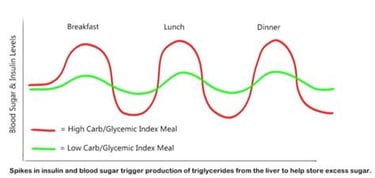
When you eat, your blood sugar rises. That’s normal. Your body releases insulin to move that sugar into your cells for energy. Remember that? But when sugar rises very quickly, your body reacts very quickly too. It releases a large amount of insulin all at once. And that sudden surge is called ‘an insulin spike.’
So why does it happen then? Well… Some foods hit the bloodstream fast. Things like:
• Sugary cereals
• White bread
• Biscuits
• Fruit juice
They don’t hang about. They go in, like a rat up a drainpipe. So, your pancreas sees that instant rapid rise and thinks: “Uh-Oh, I need to deal with this... right now.” So the pancreas sends out a strong insulin response to bring things back down. It’s automatic. It’s not a fault. It’s your body trying to protect you.
The problem isn’t just the rise… It’s what happens next. A big insulin release can bring blood sugar down quickly. Sometimes too quickly. So you tend to get a sharp rise, followed by a sharp drop. That drop can leave you feeling:
• Tired
• Hungry
• A bit shaky
• Craving something sweet
So you eat again… often the same kind of food and the cycle repeats.
The Bigger Picture
If this happens occasionally, it’s just part of life. No big deal eh? But if it happens frequently, day after day:
• Your body keeps pumping out insulin, overwhelming the system
• Your cells start to ignore it (insulin resistance)
• Blood sugar becomes harder and harder to control
This is one of the key patterns behind Type 2 diabetes.
Real-Life Example
A typical morning, for a typical person might look like this, a bowl of cereal, with a couple of slices of toast and a glass of juice. This is generally what’s recommended as a healthy breakfast. However, this type of food will make the blood sugar rise quickly. Hence, an insulin spike. Then, by mid-morning… you’re hungry again. This is not lack of willpower. This is biology.
There used to be a standing joke told about ordering a curry and rice takeaway. You would scoff it and 20 minutes later, you would crave another one. That’s the body craving more carbs, after an existing carbs hit.
In my past, I am guilty of buying two takeaway curries. One for that night. Then the second for later on, or the next morning. Because my body craved for that next carbs hit. The same with a bread sandwich at supper time. Not only does your metabolism slow and not digest properly, it craves that second carbs hit. I personally try to avoid eating late.
What You Can Do
You don’t need perfection. Just small changes.
• Add protein to meals (eggs, yoghurt, meat, fish)
• Be careful with sugary breakfasts
• Swap some fast carbs for slower ones
• Aim for steady energy rather than quick hits
Even one better choice can smooth things out.
The Dawn Phenomenon
Your body isn’t working against you. It’s reacting to what it’s given. Fast fuel creates sharp spikes.
Steady fuel creates steady energy. And once you understand that… Things start to feel a lot more in your control.
Here’s something most people don’t know. Your body actually gives you a natural blood sugar rise first thing in the morning. It has a slightly boffin name: The Dawn Phenomenon.
Between roughly 4am and 8am, your body releases stored sugar to wake you up and get you moving. It’s completely natural. The problem is, if you then pile in a high-carb breakfast on top of that, you’re stacking one spike on top of another. No wonder things can feel all over the place.
These days, I don’t usually eat breakfast. I’m taking a diabetes tablet named Semaglutide, which suppresses my appetite, so I’m simply not hungry. I’ll eat later, around lunchtime, and that works well for me.